Category: Crypto Payments

  • Crypto-to-Fiat Settlement: A Practical Guide | Cyrafa

    Crypto-to-Fiat Settlement: A Practical Guide | Cyrafa

    Crypto-to-fiat settlement is the process of turning digital asset balances into payout-ready fiat with a known destination, a known timing, and a clear record trail. For a crypto business, it is one of the most repeated workflows in finance: revenue arrives in USDT or USDC, and obligations — payroll, suppliers, software, taxes — leave in fiat.

    The conversion itself is rarely the hard part. The hard part is everything around it: deciding when to convert, who approves it, where the fiat lands, how the rate and fees are recorded, and how the transaction reconciles at month-end. When those answers live across an exchange account, a bank account, and a spreadsheet, settlement becomes an operational risk instead of a routine step.

    A settlement workflow is not defined by the rate quoted on a single conversion. It is defined by how predictably funds move from crypto balance to usable fiat, and how clearly the team can explain what happened.

    What a crypto-to-fiat settlement workflow needs to cover

    Before choosing tools or providers, map what the workflow actually has to answer. Most crypto businesses need to think about six connected areas:

    1. Conversion triggers and timing

    The team needs a clear answer to “when do we convert?” Common approaches include converting on a schedule (for example, weekly), above a balance threshold, or ahead of known obligations such as payroll dates. Deciding the trigger in advance turns settlement from a judgment call into a repeatable policy.

    2. Execution and routing

    Execution covers where the conversion happens and how funds move after it: which account receives the fiat, which entity it belongs to, and whether it settles directly into a payout-ready balance. Routing decided at execution time — rather than in advance — is a common source of delays and reconciliation gaps.

    3. Destination accounts

    Fiat that cannot be used is not settled. The destination account needs to support the currencies the business pays in and connect to the payout workflows — local transfers or SWIFT — that the business actually uses.

    4. Approvals and controls

    Conversions move real value. The workflow should define who can execute a conversion, who approves amounts above a threshold, and what evidence remains afterwards. Without that model, settlement depends on individual memory and chat history.

    5. Records and reconciliation

    Every conversion should capture the amount converted, the rate applied, the fees taken, the timestamp, and the destination reference. When those records are captured automatically, reconciliation becomes a review task instead of a rebuild task.

    6. Treasury context

    Settlement decisions should sit inside treasury visibility: balances across crypto and fiat, what is committed, what is available, and what is needed for upcoming obligations. A conversion executed with full context rarely surprises anyone.

    Where settlement usually breaks down

    A settlement workflow can look fine at low volume and still fail as the business grows. The common failure points:

    • The rate recorded by finance does not match the rate actually applied at execution.
    • Converted fiat lands in an account that is not connected to payouts, forcing an extra internal transfer.
    • No one owns the “when to convert” decision, so timing drifts week to week.
    • Fees are spread across the exchange, the receiving account, and the payout rail, making true cost hard to total.
    • Reconciliation is rebuilt manually from statements and screenshots.
    • Payout dates and settlement dates are managed separately, so payments wait on funds that exist but are not yet usable.

    None of these are conversion problems. They are workflow problems — and they are solved by designing the path, not by chasing better rates on individual trades.

    A practical settlement workflow, step by step

    Step 1: Define the conversion trigger

    Write down the policy: convert weekly, convert above a set threshold, or convert ahead of obligations. The policy should be boring enough that anyone on the team can predict what will happen.

    Step 2: Decide the destination before converting

    Before executing, confirm which account receives the fiat, in which currency, and whether that balance is payout-ready. If the answer requires a second transfer after conversion, plan that handoff as part of the workflow.

    Step 3: Set the approval model

    Decide thresholds, approvers, and what gets logged. Keep it proportional: routine conversions under policy run without friction, while larger or unusual conversions get explicit review.

    Step 4: Capture rate, fees, and references at execution

    Record what was converted, the rate applied, the fees, and the destination reference at the moment of execution. This single habit removes most month-end reconciliation work.

    Step 5: Review the workflow as volume grows

    Revisit triggers, thresholds, and destinations monthly. Settlement needs change with payroll size, supplier mix, and market conditions — the workflow should change with them deliberately rather than by drift.

    Where Cyrafa fits

    Cyrafa is built around crypto-to-fiat settlement as a business workflow rather than a one-off trade. Its platform turns digital asset balances into payout-ready fiat while keeping approvals, treasury visibility, and settlement paths connected — with transparent execution, routing guided by policy, and balances that settle into payout-ready funds.

    The related platform pages cover Business IBANs, crypto payment workflows, crypto-to-fiat exchange, SWIFT transfers, treasury management, and payouts. Teams can start with a single settlement path and expand as their operation grows.

    Corporate Cards are currently marked as Coming Soon, so businesses should evaluate the available account, conversion, settlement, and treasury workflows based on their current needs.

    Questions to ask about your current settlement path

    Before adding another provider or process:

    • Can the team explain, for any conversion last month, the rate applied and the fees paid?
    • Does converted fiat settle where payouts are executed from?
    • Is there a defined trigger for when to convert, or is it decided ad hoc?
    • Do approvals exist for conversions, and are they auditable?
    • Does reconciliation depend on manual statement matching?
    • Would a new entity, currency, or payout destination require rebuilding the workflow?

    The answers usually point to the same place: the gap between conversion and usable funds.

    Final takeaway

    Good crypto-to-fiat settlement is predictable. The trigger is defined, the destination is known, the approvals are clear, and the records exist.

    Start with the trigger policy. Decide destinations before executing. Add approvals proportionate to value. Capture rate and fees at execution. Then choose a platform that keeps conversion, treasury, and payouts connected instead of split across providers.

    Ready to review your crypto-to-fiat settlement path? Talk to the Cyrafa team.

  • How to Build a Finance Stack for a Global Web3 Company | Cyrafa

    How to Build a Finance Stack for a Global Web3 Company | Cyrafa

    Global Web3 companies rarely operate through one payment rail or one currency. They may collect fiat from customers, receive digital assets, pay global contributors, settle with vendors, manage treasury balances, and move funds across borders.

    That flexibility creates opportunity, but it can also create operational friction. When every workflow lives with a different provider, the finance team spends more time switching between systems, checking balances, confirming payment status, and rebuilding transaction context.

    A strong Web3 finance stack is not defined by the number of accounts or tools it contains. It is defined by how clearly the business can move, control, and understand its money.

    What a modern Web3 finance stack needs to handle

    Before selecting providers, map the money flow across the business. Most global Web3 companies need to think about six connected areas:

    1. Business collections

    The company needs a clear way to receive business payments and identify where each payment belongs. A dedicated business account structure can make collection, routing, and reconciliation easier to manage than a collection of informal or disconnected arrangements.

    2. Crypto payment acceptance

    Some customers and partners prefer to pay in digital assets. A crypto payment workflow should be considered alongside the company’s settlement process, not as an isolated checkout feature. The important questions are practical: How is the payment recorded? Where does the balance go? How does the team convert or settle it when needed?

    3. Crypto-to-fiat settlement

    Web3 businesses often need to move between crypto and fiat as part of normal operations. The finance team should understand the intended conversion path, the destination account, the timing of settlement, and the records required for reconciliation.

    4. Treasury visibility

    Knowing a balance is not the same as knowing the company’s usable liquidity. Treasury visibility means understanding balances across relevant accounts and assets, what is committed, what is available, and what needs to be moved for upcoming obligations.

    5. Global transfers and payouts

    Vendors, employees, contractors, partners, and customers may all require different payout routes. International transfer workflows, including SWIFT where appropriate, need clear ownership and status tracking so that operations teams are not forced to chase updates across multiple inboxes and dashboards.

    6. Controls and reporting

    As the team grows, payment execution should not depend on one person’s memory. Roles, permissions, approvals, transaction history, and reporting help finance and operations teams work from the same context.

    The problem with a fragmented stack

    A fragmented stack can appear efficient at the beginning. One provider handles an account, another handles crypto payments, a spreadsheet tracks treasury, and a messaging app carries approval requests.

    The friction usually appears later:

    • The same transaction has to be checked in more than one system.
    • Finance and operations see different versions of the current balance.
    • Approval decisions are difficult to audit.
    • Payout status depends on manual follow-up.
    • Month-end reconciliation takes longer as transaction volume grows.
    • A change in one provider creates work across the rest of the stack.

    The answer is not always to replace every provider immediately. A better first step is to identify the handoffs that create the most risk and delay, then design a clearer operating layer around them.

    A practical framework for building the stack

    Step 1: Draw the current money map

    Document how money enters, moves through, and leaves the business. Include customers, exchanges, wallets, business accounts, vendors, payroll, and treasury destinations.

    For each flow, record:

    • Currency or asset
    • Sending and receiving party
    • Account or wallet used
    • Approval owner
    • Expected settlement time
    • Reconciliation method

    This simple map often reveals that the biggest problem is not the payment itself. It is the missing context around the payment.

    Step 2: Separate collection, settlement, and treasury decisions

    These are related but different jobs. Collection answers how the business receives funds. Settlement answers how funds become usable in the required currency or account. Treasury answers how the business holds and allocates liquidity.

    Keeping these decisions separate makes it easier to choose the right workflow for each one.

    Step 3: Define the approval model

    Decide which payments require review, who can approve them, and what evidence should remain after execution. A clear approval model should work for recurring payouts as well as exceptional transactions.

    Step 4: Make reconciliation part of the workflow

    Reconciliation should not be a cleanup task at the end of the month. Capture transaction references, purpose, counterparty, status, and account context as close to execution as possible.

    Step 5: Choose a connected operating layer

    Once the money map is clear, look for a platform that can bring the relevant workflows into one business-facing operating layer. The goal is not to force every activity into one product. The goal is to reduce unnecessary switching and keep control, visibility, and execution close together.

    Where Cyrafa fits

    Cyrafa is designed for businesses that operate across crypto and fiat workflows and need a clearer way to manage business finance. Its platform pages cover Business IBANs, crypto payment workflows, crypto-to-fiat exchange, SWIFT transfers, treasury management, and payouts.

    The platform is also designed around practical operating needs such as permissions, approvals, transaction visibility, and reporting. This helps teams start with a specific workflow and expand as their finance operation becomes more complex.

    Corporate Cards are currently marked as Coming Soon, so businesses should evaluate the available account, payment, settlement, and treasury workflows based on their current needs.

    Questions to ask before changing your stack

    Before adding another provider, ask:

    1. Can the finance team see the full status of a transaction without checking several systems?
    2. Are crypto and fiat balances understood in the same operating context?
    3. Can the business explain who approved a payout and why?
    4. Are international transfers and vendor payouts easy to track?
    5. Does the current setup scale with more entities, currencies, and team members?
    6. Which workflow creates the most manual work every week?

    The answers will show where to start. A finance stack does not need to become complex just because the business is global. It needs to become more connected as the money flow becomes more diverse.

    Final takeaway

    The best finance stack for a global Web3 company is the one that gives the team a clear view of its money and a controlled way to move it.

    Start with the money map. Separate collections, settlement, and treasury decisions. Add clear approvals and reconciliation. Then choose the operating layer that can bring the most important workflows closer together.

    For businesses managing crypto, fiat, global transfers, and payouts, Cyrafa provides a starting point for building that more connected workflow.

    Ready to map your current finance flow? Talk to the Cyrafa team.


  • How to Choose a Payment Provider for a Forex Brokerage

    How to Choose a Payment Provider for a Forex Brokerage

    Choosing a payment provider for a forex brokerage is not simply a comparison of transaction fees or supported payment methods. The provider must fit the brokerage’s entities, currencies, client funding model, withdrawal process, treasury controls, compliance requirements, reconciliation workflow, and expected transaction volume. A weak fit can create failed payments, trapped liquidity, manual exceptions, and an expensive migration later.

    The right choice starts with the brokerage’s operating model—not a provider’s feature list. This guide gives broker finance, operations, compliance, and product teams a practical framework for defining requirements, comparing providers, running due diligence, and completing a controlled pilot before committing meaningful payment volume.

    Why forex brokerages need a different evaluation process

    A generic payment-provider checklist rarely captures the complexity of broker operations. Forex businesses may collect client funds, process withdrawals, pay partners, move liquidity between accounts, convert crypto and fiat, and settle across currencies and jurisdictions. These flows do not all have the same risk, urgency, approval requirements, or data needs.

    The choice also affects more than checkout conversion. A provider can shape:

    • how quickly operations can identify and route incoming funds;
    • how finance teams control withdrawals and bulk payouts;
    • where working balances must be held;
    • how fees and foreign-exchange differences are recorded;
    • how compliance teams review transactions and counterparties;
    • how easily transactions can be reconciled; and
    • how the brokerage responds when a rail or provider becomes unavailable.

    This is why the evaluation team should include finance, treasury, operations, compliance, technology, customer support, and the business owner for each payment flow. Procurement alone should not decide.

    First, define what the provider must actually do

    Before contacting vendors, map the required flows. Separate current requirements from expected needs over the next 12 to 24 months. Otherwise, attractive but irrelevant features can outweigh operational gaps.

    For each flow, document:

    • payer or beneficiary type;
    • originating and receiving legal entity;
    • countries or markets involved;
    • currency or digital asset;
    • expected transaction count and value;
    • peak-volume assumptions;
    • payment rail;
    • acceptable settlement window;
    • approval model;
    • required references and reports; and
    • refund, return, rejection, or exception process.

    A brokerage could group its flows into four categories.

    1. Client collections

    Define how clients fund accounts, how the brokerage identifies the sender, when funds become available, and when the trading ledger is credited. Ask whether collection accounts, business-account workflows, or crypto payment instructions can preserve the references needed to connect a payment to the correct client and entity.

    2. Client withdrawals

    Document beneficiary validation, approval thresholds, cut-off times, payout currencies, destination rules, and the evidence required to confirm completion. A fast initiation time is not useful if the brokerage cannot see whether a payment is pending, rejected, returned, or settled.

    3. Partner and operating payouts

    Introducing brokers, affiliates, vendors, and other partners may require scheduled or bulk payments. Evaluate whether the workflow supports batches, multi-user approval, status tracking, and downloadable transaction records.

    4. Treasury and settlement

    Map how balances move between collection, operating, safeguarding where applicable, settlement, and treasury accounts. If the brokerage uses both crypto and fiat, include conversion, liquidity access, network selection, and the ownership of fees and exchange-rate decisions.

    If this architecture is not yet defined, begin with Cyrafa’s guide to building a forex broker payment stack. The provider-selection exercise should test candidates against that architecture rather than allow a vendor to define it by default.

    Eleven criteria for comparing forex payment providers

    1. Entity, market, currency, and rail coverage

    “Global coverage” is too vague for due diligence. Request a written matrix showing which of your legal entities can be onboarded, which currencies or assets are supported, and which flows are available for each market.

    Confirm the difference between:

    • the countries where the provider can onboard the brokerage;
    • the locations from which payments can originate;
    • the destinations to which funds can be sent;
    • the currencies that can be held, received, sent, or converted; and
    • the rails available for collections, transfers, and payouts.

    Do not assume that support for a currency means the provider can collect, hold, convert, and pay it out in every required entity. Ask for the complete route.

    2. Fit for deposits, withdrawals, and payouts

    A provider may perform well for one flow and poorly for another. Score collections, withdrawals, partner payouts, and treasury transfers separately.

    For every flow, request a lifecycle diagram and a status list. The provider should explain what each status means, which events are final, how reversals are represented, and how your system receives updates. This matters because “processed” may mean an instruction was accepted rather than that the beneficiary received funds.

    3. Settlement model and liquidity impact

    Provider selection is also a treasury decision. Ask where funds are held, when they are available, which balances must be prefunded, and whether reserves, limits, or settlement delays can apply.

    Build a daily liquidity model using realistic volumes. Include:

    • opening balance requirements;
    • expected client inflows and withdrawals;
    • conversion timing;
    • provider cut-off times;
    • weekends and local holidays;
    • pending or returned transactions; and
    • concentration limits by account, provider, currency, or asset.

    A low transaction fee can be outweighed by the cost of maintaining excess balances across several disconnected accounts. Cyrafa’s treasury management page explains how balance visibility, approvals, and settlement context can sit closer to payment execution.

    4. Complete pricing—not the headline fee

    Request pricing for the specific routes in your requirements matrix. Compare the expected total cost of ownership rather than a single percentage.

    The model should include, where applicable:

    • setup or onboarding fees;
    • monthly minimums;
    • incoming and outgoing transaction fees;
    • currency-conversion costs and spreads;
    • blockchain network or withdrawal fees;
    • SWIFT or intermediary-bank charges;
    • return, rejection, recall, or investigation fees;
    • account or balance fees;
    • reporting or API charges; and
    • internal staff time spent on exceptions and reconciliation.

    Run at least three scenarios: expected volume, peak volume, and a stress case with more failures or manual reviews. Require the provider to state which charges are fixed, variable, passed through, or subject to change.

    5. Compliance and onboarding alignment

    The question is not whether a provider says it is “compliant.” Ask what it needs from your brokerage, which entities perform each service, and how the control model works in practice.

    Review:

    • contracting and service-providing entities;
    • licences or registrations relevant to the proposed service and location;
    • supported customer and business models;
    • onboarding documents and expected refresh cycles;
    • transaction-monitoring responsibilities;
    • sanctions and screening responsibilities;
    • source-of-funds or source-of-wealth escalation processes;
    • restricted countries, activities, assets, and counterparties;
    • information required for bank and crypto transfers; and
    • account restriction, suspension, and termination procedures.

    Where virtual assets are involved, risk assessment should be specific to the assets, products, counterparties, delivery channels, and markets in the proposed flow. The FATF’s updated guidance for virtual assets and virtual asset service providers explains the risk-based approach and the application of relevant anti-money-laundering and counter-terrorist-financing measures to this sector.

    The brokerage should obtain its own legal and compliance advice. A provider relationship does not transfer the brokerage’s obligations to the vendor.

    6. Controls, permissions, and approvals

    Ask the provider to demonstrate the control model rather than describe it. Test whether the platform can support:

    • separate roles for creators, approvers, reviewers, and administrators;
    • multi-user approval for sensitive payments;
    • amount-based or workflow-based approval rules;
    • entity and account separation;
    • beneficiary management controls;
    • audit logs for user and transaction actions;
    • API credential permissions and rotation; and
    • alerts for unusual or high-value activity.

    The workflow should reflect how your teams operate. Shared logins, approval through chat messages, or manual evidence stored outside the payment system create avoidable control gaps.

    7. Integration quality

    An API checklist should cover the entire transaction lifecycle, not only payment creation. Ask for sandbox access and test:

    • account and balance retrieval;
    • payment initiation;
    • idempotency and duplicate prevention;
    • webhooks or event notifications;
    • status changes and finality;
    • fees and exchange-rate fields;
    • batch or bulk instructions;
    • beneficiary creation and validation;
    • refunds, returns, recalls, and rejections;
    • rate limits and retry behaviour; and
    • report exports and historical retrieval.

    Check how breaking changes are communicated and how long older API versions remain supported. The provider should also explain the process for planned maintenance and emergency changes.

    8. Reconciliation and reporting

    Every provider demo should include a reconciliation exercise using sample transactions. Confirm that each payment includes stable identifiers and that reports contain gross amount, net amount, currency, fees, timestamps, status, entity, account, and external references.

    Ask whether reports can be generated through the interface and API, whether historical data remains accessible, and whether adjustments appear as new events rather than silent changes.

    Use the practical controls in Cyrafa’s forex broker payment reconciliation guide to test whether the provider’s data can support daily matching and exception management.

    9. Security and operational resilience

    Request evidence appropriate to the service, not just a security logo on a sales deck. Review access controls, encryption, credential management, security testing, incident response, recovery arrangements, subcontractor dependencies, and data-retention practices.

    Then test operational failure scenarios:

    • API or portal unavailability;
    • delayed webhooks;
    • a bank or blockchain rail outage;
    • incorrect status reporting;
    • frozen or restricted transactions;
    • compromised user credentials;
    • provider-side processing backlogs; and
    • loss of access to reports during an investigation.

    Ask for incident notification targets, escalation contacts, recovery objectives, and the evidence supplied after an incident. Service uptime alone does not describe whether payments, balances, and reporting remain usable.

    10. Support and exception handling

    Support quality is most visible when a high-value payment is missing or a withdrawal batch is delayed. Request the support model in writing:

    • service hours and time zones;
    • standard and urgent channels;
    • severity definitions;
    • first-response and resolution targets;
    • escalation path;
    • named relationship contacts, if included;
    • languages supported; and
    • investigation evidence required from the brokerage.

    During the pilot, submit realistic questions and record the clarity, ownership, and response time. A polished sales process does not prove effective operations support.

    11. Contract terms, concentration, and exit readiness

    Commercial due diligence should cover service scope, limits, liability, data access, subcontracting, pricing changes, reserve or balance conditions, termination rights, and the treatment of pending transactions after termination.

    Avoid designing a workflow that cannot be moved. The brokerage should know how it would:

    • export transaction and beneficiary data;
    • settle or withdraw remaining balances;
    • handle payments still in progress;
    • redirect client instructions;
    • revoke API keys and user access;
    • retain required records; and
    • activate a backup route.

    Provider concentration is not automatically wrong, but it should be measured and approved. A second provider is useful only when the backup route has been onboarded, integrated, funded where necessary, and tested.

    A practical provider scorecard

    Use weighted scoring so that a small pricing advantage cannot hide a critical control or coverage gap. A starting model might look like this:

    Evaluation areaSuggested weightEvidence to request
    Entity, market, currency, and rail coverage15%Written route matrix and restrictions
    Flow and settlement fit15%Lifecycle maps, limits, cut-offs, funding model
    Compliance and onboarding15%Entity details, responsibilities, policies, restrictions
    Controls and security15%Live demo, audit logs, security and incident evidence
    Integration and data15%Sandbox tests, API documentation, sample events and reports
    Pricing and liquidity impact10%Full pricing schedule and scenario model
    Reconciliation and reporting5%Sample transaction and settlement files
    Resilience and support5%SLA, escalation route, continuity evidence
    Contract and exit readiness5%Draft agreement, data export and termination process

    Score each category from 1 to 5, multiply it by the weight, and attach evidence to every score. Mark non-negotiable requirements as pass/fail. A provider that fails an essential entity, compliance, security, or settlement requirement should not win through a high average elsewhere.

    Weights should reflect the brokerage’s actual model. A crypto-heavy business may place more weight on supported networks, wallet controls, conversion, and blockchain transaction data. A business using bank rails may prioritise collection-account structure, payment references, SWIFT visibility, and return handling.

    Questions to ask during an RFP or provider demo

    Use questions that require concrete answers:

    1. Which of our legal entities can you onboard, and which entity will contract with and serve each one?
    2. Show the complete route for each required currency or asset, from receipt to withdrawal or settlement.
    3. Which limits, reserves, prefunding rules, cut-off times, or settlement delays could apply?
    4. Which transaction statuses exist, and which status proves final settlement?
    5. How are fees, FX rates, intermediary charges, and network costs represented in reports?
    6. What information is returned when a payment is rejected, returned, recalled, or held for review?
    7. Can we assign different permissions and approval rules by user, entity, account, and amount?
    8. How do you prevent duplicate API instructions and recover from missed events?
    9. What is the escalation route for an urgent, high-value transaction?
    10. Which banks, processors, custodians, liquidity partners, or other subcontractors are critical to this service?
    11. What notice do you provide before a material service, pricing, API, or policy change?
    12. How do we export our full transaction history and move balances if the relationship ends?

    Record answers in the scorecard. Verbal statements that affect coverage, pricing, controls, or settlement should be confirmed in product documentation or the contract.

    Red flags that deserve further investigation

    Pause the evaluation when a candidate:

    • promises “global” access without a route-by-route coverage matrix;
    • cannot identify the contracting and service-providing entities;
    • quotes one headline price but will not disclose other charges;
    • uses ambiguous terms for settlement or transaction finality;
    • cannot provide sample reports before contracting;
    • offers an API without reliable status events or duplicate protection;
    • relies on shared accounts or weak user permissions;
    • cannot explain restricted flows or escalation procedures;
    • avoids questions about critical subcontractors or service dependencies;
    • has no credible process for exporting data and remaining funds; or
    • pressures the brokerage to commit volume before completing a realistic pilot.

    A red flag does not always require immediate rejection, but it requires evidence and an accountable decision before the provider receives live volume.

    Run a controlled pilot before migration

    A pilot should prove the provider’s operational fit, not merely show that one payment can be sent. Use a limited entity, route, currency, client group, or payout type and define success criteria in advance.

    Test normal and exception scenarios, including:

    • successful receipt and identification of funds;
    • approved withdrawal or partner payout;
    • incorrect or missing reference;
    • duplicate instruction;
    • rejected beneficiary or transaction;
    • return or reversal;
    • delayed status update;
    • fee and FX reconciliation;
    • user approval and audit trail;
    • support escalation; and
    • daily report export and matching.

    Measure completion time, failure rate, exception rate, manual touches, reconciliation lag, support performance, fee variance, and liquidity held. The pilot should end with a documented go, remediate, or reject decision.

    Do not move all volume on the first successful test. Increase it through controlled stages, confirm daily balances and exceptions, and retain a tested fallback until the new route is stable.

    How Cyrafa supports connected broker payment operations

    Cyrafa’s forex broker payment solutions are designed to coordinate client collections, settlement, treasury controls, and partner payouts across fiat and crypto rails. Broker teams can connect business-account workflows, bank transfers, crypto movement, bulk execution, and approval-ready controls inside one operating layer.

    Depending on the agreed operating model, related Cyrafa services include Business IBAN, SWIFT transfers, a crypto payment gateway, and crypto-to-fiat workflows. The objective is not to add every rail at once. It is to build a controlled workflow in which transaction visibility, approvals, treasury context, and execution stay connected as the brokerage grows.

    Choose on evidence, not promises

    The best payment provider for a forex brokerage is the one that fits the broker’s real entities and flows, produces usable transaction data, supports appropriate controls, explains its dependencies and restrictions, and performs under realistic operating conditions.

    Start with a requirements matrix. Compare full-route coverage and total cost. Test compliance responsibilities, permissions, reporting, resilience, and support. Then validate the result through a controlled pilot and preserve an exit route.

    Ready to evaluate a connected payment workflow for your brokerage? Talk to Cyrafa about your collections, settlement, treasury, and payout requirements.

  • Forex Broker Payment Reconciliation: A Practical Guide for Deposits and Withdrawals

    Forex Broker Payment Reconciliation: A Practical Guide for Deposits and Withdrawals

    Forex broker payment reconciliation is the process of proving that every deposit, withdrawal, fee, conversion, and settlement recorded by a payment provider matches the correct client, trading account, legal entity, and accounting entry. When it works, finance and operations share one reliable view of what moved. When it fails, the broker accumulates unmatched payments, incorrect client balances, support tickets, and month-end risk.

    The challenge becomes harder as the brokerage adds crypto payments, business accounts, SWIFT transfers, multiple currencies, and several payment providers. More rails create more ways for clients to fund and withdraw, but they also produce different references, statuses, fees, settlement schedules, and data formats.

    This guide explains how to build a reconciliation workflow that connects payment execution to client ledgers, approvals, treasury, and accounting. It also shows how Cyrafa’s forex broker payment solutions can keep collections, settlement, payouts, and transaction visibility inside one operating layer.

    What is payment reconciliation for a forex broker?

    Payment reconciliation compares records from separate systems and confirms that they describe the same transaction.

    For a typical client deposit, the broker may need to match:

    1. the client’s funding request;
    2. the bank, payment-provider, or blockchain transaction;
    3. the credit posted to the CRM or trading account;
    4. the provider’s fee and settlement amount;
    5. the movement into the broker’s business or treasury account; and
    6. the accounting entry for the correct legal entity.

    For a withdrawal, the broker may need to match:

    1. the client’s request;
    2. the approved amount and destination;
    3. the debit from the trading or client ledger;
    4. the outgoing provider instruction;
    5. the bank or blockchain settlement reference;
    6. fees and exchange-rate differences; and
    7. the final completed, rejected, returned, or pending status.

    Reconciliation is complete only when the records agree or an explained exception has been assigned to an owner. A transaction that appears in one system but not another is not reconciled merely because the total balance looks reasonable.

    Why reconciliation becomes difficult as a brokerage grows

    Small operations can sometimes investigate transactions manually. That approach breaks down when client volume, providers, currencies, entities, and payment methods increase.

    Multiple systems use different identifiers

    A single deposit may have a CRM request ID, provider transaction ID, bank reference, blockchain hash, client account number, and internal ledger entry. If the broker does not preserve the relationship between them, teams must search several portals to reconstruct the payment.

    Provider statuses do not mean the same thing

    “Created,” “authorised,” “confirmed,” “processed,” “sent,” and “settled” may represent different stages depending on the rail. A broker needs an internal status model that translates provider events into a consistent operational meaning.

    Fees and FX create amount differences

    The amount requested by the client may differ from the amount received, credited, converted, or settled. Network fees, provider charges, correspondent-bank deductions, spreads, and currency conversions must be recorded rather than treated as unexplained discrepancies.

    Settlement timing creates temporary breaks

    A client may be credited before the provider settles funds into the broker’s account. Some bank transfers and conversions complete on different schedules. The reconciliation process must distinguish a valid timing difference from a missing transaction.

    Different legal entities may share operations

    A brokerage group may operate across markets and entities while using common teams or systems. Every payment still needs the correct entity, account, purpose, and accounting treatment. Otherwise, an operationally successful payment can become an intercompany or reporting problem.

    The records every broker should connect

    A strong data model begins with a unique internal transaction ID. That ID should connect the client or business event to every later record, even when external providers use their own references.

    For each deposit or withdrawal, capture:

    • internal transaction ID;
    • client and trading-account ID;
    • legal entity;
    • transaction type;
    • payment method and provider;
    • original amount and currency or asset;
    • expected net amount;
    • fee components;
    • exchange rate and conversion amount where relevant;
    • source or destination details permitted by policy;
    • provider transaction reference;
    • bank reference or blockchain transaction hash;
    • initiated, approved, confirmed, and settled timestamps;
    • current internal and external statuses; and
    • exception reason and owner where applicable.

    Structured payment data supports automation. Swift describes ISO 20022 as an open global standard that provides rich, consistent, and structured financial information. Swift also highlights benefits including better analytics, less manual intervention, more accurate compliance processes, and enhanced straight-through processing. Even when a broker is not implementing the standard directly, the principle remains useful: better structured references create better reconciliation.

    A five-stage forex broker reconciliation workflow

    The process should run continuously through the payment lifecycle rather than wait until month-end.

    Stage 1: Capture the payment intent

    Create the internal transaction record before money moves. For a deposit, this may happen when the client chooses a funding method. For a withdrawal, it begins when the client submits the request.

    The record should state:

    • who initiated the payment;
    • what type of transaction it is;
    • the expected amount and asset or currency;
    • the selected provider and route;
    • the relevant client and entity; and
    • the reference that external systems should preserve.

    If the process begins with an unidentified incoming transfer, matching will always be harder.

    Stage 2: Ingest provider events

    Collect status updates and transaction data from the bank, crypto gateway, payment provider, or internal execution workflow. Where integrations are available, use event-driven or scheduled ingestion rather than manual downloads alone.

    Store the original provider reference and status, then map it to the broker’s internal status model. Do not overwrite earlier events; the history is valuable when a payment is disputed or delayed.

    Stage 3: Apply matching rules

    Matching rules compare the internal instruction with the external transaction. A high-confidence match can use several fields:

    • unique transaction or virtual-account reference;
    • client or trading-account identifier;
    • exact asset and network;
    • amount within an allowed tolerance;
    • currency;
    • source or destination;
    • provider; and
    • expected time window.

    Use the strongest identifiers first. Matching only by amount and date creates false positives when many clients fund similar amounts.

    Stage 4: Separate matches from exceptions

    Transactions that satisfy the rules can move through the normal reconciliation path. Anything uncertain should enter an exception queue rather than be forced into a match.

    The exception record should show:

    • what failed to match;
    • the affected client, entity, and provider where known;
    • the amount at risk;
    • the reason category;
    • the responsible team or person;
    • the next action; and
    • how long the item has been open.

    Stage 5: Confirm settlement and accounting

    A deposit is not fully reconciled just because the client account was credited. Confirm the provider settlement, fees, FX, and destination account. A withdrawal is not complete just because the instruction was released; confirm the final settlement or record the rejection or return.

    The accounting entry should reflect the correct gross amount, fees, currency movement, entity, and period. At this stage, finance should be able to trace the ledger entry back to the client or business event without rebuilding the story from emails.

    How to reconcile forex broker deposits

    Deposits create both customer-experience and financial-control risk. Crediting too slowly frustrates traders; crediting incorrectly exposes the broker.

    Bank and IBAN deposits

    A business IBAN workflow can provide clearer fiat collection routes, but reconciliation still depends on reliable payment references and account ownership data.

    Match:

    • expected funding request;
    • sender and beneficiary information available to the broker;
    • currency and amount;
    • reference or virtual-account data;
    • bank transaction status;
    • client credit; and
    • final settlement into the correct business account.

    Create an exception when the payment has no usable reference, comes from an unexpected source, uses the wrong currency, or differs from the expected amount.

    Crypto deposits

    A crypto payment gateway should connect the blockchain payment to the client funding request and make reconciliation more reliable than using a general shared wallet.

    Match:

    • invoice or deposit request ID;
    • client account;
    • assigned address or transaction reference;
    • token and blockchain network;
    • amount received;
    • transaction hash;
    • confirmation status;
    • credited amount; and
    • any conversion or network fees.

    A transaction on the wrong network, unsupported asset, incorrect amount, or shared address may require manual review. Do not credit solely because a wallet balance increased.

    Deposits with conversion

    When the client funds in one asset or currency and the trading account is credited in another, preserve both sides of the conversion:

    • original amount;
    • execution rate;
    • provider or spread cost;
    • converted amount;
    • credited amount; and
    • settlement destination.

    Cyrafa’s crypto-to-fiat workflow keeps conversion, treasury review, and payout-ready settlement close together, which can reduce the handoffs finance must trace later.

    How to reconcile forex broker withdrawals

    Withdrawals add approval and destination risk to the reconciliation process.

    Before release, connect the request to:

    • the verified client and trading account;
    • available and withdrawable balance;
    • approved amount and currency or asset;
    • verified bank account or wallet;
    • required compliance review;
    • approver; and
    • selected payment route.

    After release, match:

    • the internal withdrawal ID;
    • provider instruction;
    • outgoing account debit;
    • bank reference or transaction hash;
    • fees;
    • final recipient amount where available;
    • settlement timestamp; and
    • completed, rejected, returned, or pending status.

    Do not mark a withdrawal complete based only on an internal approval or submitted provider instruction. The internal status should reflect the strongest settlement evidence available for the rail.

    Reconciliation across SWIFT and cross-border transfers

    SWIFT transfers can support international settlement and payments, while approvals, treasury context, and status remain part of the operating workflow.

    Cross-border transfers may include correspondent banks, intermediary fees, cut-off times, and additional information requests. Reconciliation should therefore distinguish:

    • instructed amount;
    • debited amount;
    • fees paid by the sender;
    • intermediary or receiving deductions where known;
    • beneficiary amount;
    • value date;
    • transfer reference; and
    • final status.

    If the recipient reports a short payment, the team should be able to separate an agreed fee arrangement from an unexplained discrepancy.

    The exception queue: where reconciliation succeeds or fails

    Automation handles normal transactions. Operational quality is revealed by how the brokerage manages exceptions.

    Common exception types include:

    • payment received without a client reference;
    • duplicate provider event or duplicate credit;
    • amount outside tolerance;
    • unsupported asset, network, or currency;
    • incorrect or changed beneficiary details;
    • payment initiated by an unexpected third party;
    • provider says completed but the beneficiary reports non-receipt;
    • bank transfer returned;
    • blockchain transaction delayed or replaced;
    • provider fee or FX difference not recorded;
    • client credited but provider settlement missing;
    • payment assigned to the wrong entity; and
    • reversal, refund, chargeback, or compliance hold.

    Prioritise exceptions by risk

    Not every break has the same urgency. Rank items using:

    • client impact;
    • amount;
    • age;
    • withdrawal versus deposit;
    • compliance risk;
    • provider or balance exposure;
    • possibility of duplicate credit or payment; and
    • financial-close deadline.

    Give every exception one owner

    An exception should not sit between finance, operations, support, and compliance. Assign a current owner, required action, and escalation time. Ownership can change, but the history should remain visible.

    Close with evidence

    Do not resolve an exception by deleting it or changing the amount until totals match. Record what happened, who approved the resolution, which entries changed, and what evidence confirms the final outcome.

    Daily, intraday, and month-end reconciliation

    Different controls operate at different frequencies.

    Intraday monitoring

    Use for high-volume or time-sensitive flows. Monitor:

    • uncredited confirmed deposits;
    • approved withdrawals awaiting release;
    • provider failures;
    • unusual status delays;
    • duplicate events; and
    • balances approaching operational limits.

    Daily reconciliation

    At least daily, compare:

    • opening and closing provider balances;
    • transaction movements;
    • client credits and debits;
    • fees and conversions;
    • settlements received or paid;
    • unresolved exceptions; and
    • expected versus actual liquidity.

    Month-end close

    Month-end should confirm the daily process rather than replace it. Finance should reconcile:

    • provider statements;
    • bank and wallet balances;
    • client-money or internal ledgers as applicable;
    • treasury and settlement accounts;
    • fees and FX results;
    • intercompany balances;
    • aged exceptions; and
    • general-ledger control accounts.

    If the team begins investigating old individual transactions only at month-end, the daily process is not strong enough.

    Reconciliation controls that reduce errors and fraud

    Separation of duties

    The same person should not be able to create, approve, release, and reconcile a material withdrawal or adjustment without independent review.

    Controlled reference creation

    Generate references systematically and prevent users from casually reusing them. Unique identifiers are one of the strongest reconciliation controls.

    Immutable event history

    Preserve original provider events, internal status changes, approvals, and adjustments. Corrections should add history rather than erase it.

    Balance controls

    Reconcile individual transactions and aggregate balances. A transaction-level match can still be incomplete if the overall provider balance contains an unexplained difference.

    Adjustment governance

    Manual credits, reversals, fee corrections, and FX adjustments require a reason, supporting evidence, and approval. Track their frequency because repeated adjustments may expose an integration or process problem.

    Beneficiary and wallet controls

    Changes to withdrawal destinations deserve additional verification and should not be hidden inside the normal payment flow.

    Metrics for payment reconciliation

    Useful metrics include:

    • automatic match rate;
    • manual-intervention rate;
    • unmatched transaction value and count;
    • exceptions by reason, provider, rail, and entity;
    • average time to resolve an exception;
    • confirmed deposits awaiting client credit;
    • approved withdrawals awaiting settlement;
    • duplicate events or payments prevented;
    • aged reconciliation items;
    • manual adjustments by value and cause;
    • provider settlement variance;
    • payment-related support tickets; and
    • days required to complete month-end close.

    A high automatic-match rate is useful only if the matching rules are accurate. Review false matches as well as unmatched items.

    A reconciliation checklist for forex brokers

    Data and references

    • Does every payment have a unique internal transaction ID?
    • Can that ID be connected to provider, bank, blockchain, CRM, trading-account, and ledger records?
    • Are fees, FX, and settlement amounts stored separately from the original instruction?

    Status management

    • Are provider statuses mapped to one internal status model?
    • Is the distinction between submitted, confirmed, settled, rejected, and returned clear?
    • Is the complete event history retained?

    Matching

    • Do rules use strong identifiers before amount and time?
    • Are tolerances documented by rail and currency?
    • Are uncertain transactions routed to review rather than forced into a match?

    Exceptions

    • Does every exception have a reason, owner, priority, and next action?
    • Are client-impacting and high-risk breaks escalated quickly?
    • Is closure supported by evidence and approval?

    Governance

    • Are manual adjustments controlled?
    • Are legal entities and accounts clearly separated?
    • Are individual transactions and provider balances both reconciled?
    • Can finance reproduce the result for an audit or management review?

    How Cyrafa supports clearer broker payment operations

    Cyrafa connects client collections, business accounts, crypto movement, conversion, settlement, payouts, approvals, and treasury visibility inside one workflow.

    For broker teams, that means payment context can remain close to execution:

    • IBAN collections and bank transfers;
    • crypto deposits and withdrawals;
    • crypto-to-fiat settlement;
    • SWIFT and cross-border transfers;
    • partner and vendor payouts;
    • role-based approvals;
    • payment and settlement status; and
    • transaction history for reconciliation and reporting.

    The goal is not simply to move money. It is to make each movement explainable from the original request through final settlement.

    For the broader infrastructure model, read How to Build a Forex Broker Payment Stack. For high-volume business payments, see the guide to bulk payouts for forex brokers.

    Frequently asked questions

    How often should forex brokers reconcile payments?

    High-volume or client-impacting flows should be monitored intraday, while provider movements, client ledger entries, fees, and settlements should normally be reconciled daily. Month-end should validate the daily process and close remaining justified items.

    What is a three-way payment match?

    In a broker context, it can mean matching the client or business instruction, the external provider transaction, and the internal ledger or trading-account entry. Some workflows add a fourth layer by confirming final bank or treasury settlement.

    Can payment reconciliation be fully automated?

    Normal transactions with consistent identifiers and data can be matched automatically. Exceptions still require controlled review. The goal is high-quality straight-through matching plus an efficient exception process, not automation that hides uncertainty.

    How should crypto deposits be reconciled?

    Connect the deposit request to the assigned address or invoice, asset, blockchain network, amount, transaction hash, confirmation status, client credit, fees, and any later conversion or settlement. An increase in a shared wallet balance is not enough by itself.

    When is a withdrawal considered reconciled?

    When the approved client request, internal debit, provider instruction, destination, fees, and strongest available settlement evidence agree—or when any difference has been investigated, documented, and approved.

    What causes most unmatched payments?

    Common causes include missing or reused references, inconsistent identifiers, amount differences, fees, FX, timing, duplicate events, wrong networks, changed beneficiaries, and status mismatches between systems.

    Authoritative reference

    This article provides general information and does not constitute legal, regulatory, accounting, tax, or financial advice. Requirements and appropriate controls vary by jurisdiction, entity, provider, payment rail, and business model.

    Make every broker payment easier to explain

    Connect collections, withdrawals, settlement, approvals, and transaction visibility in one operating workflow. Talk to Cyrafa about your forex broker payment operations.

  • Cyrafa vs Match2Pay vs B2BINPAY: Which Crypto Payment Gateway Is Best for Your Business in 2026?

    Cyrafa vs Match2Pay vs B2BINPAY: Which Crypto Payment Gateway Is Best for Your Business in 2026?

    In the rapidly evolving world of digital payments, selecting the right crypto gateway can significantly impact your operational efficiency, costs, customer experience, and compliance. Whether you’re a crypto-native startup, digital agency, forex broker, or growing e-commerce business, this in-depth comparison between Cyrafa, Match2Pay, and B2BINPAY will help you make an informed decision.

    At Cyrafa, we designed our platform to solve the real challenges businesses face when managing crypto and fiat together — offering a true unified solution.

    Quick Summary: At a Glance

    CategoryCyrafaMatch2PayB2BINPAY
    Best ForUnified business banking & treasuryHigh-speed trading & iGamingHigh-volume multi-coin processing
    Core OfferingCrypto + IBAN + SWIFT + Treasury + Cards (soon)Flexible crypto gateway (3 deployment models)All-in-one crypto ecosystem (350+ coins)
    Fiat IntegrationExcellent (IBANs, SWIFT, payouts)Good (stablecoin settlements)Good
    Treasury DashboardFull unified visibilityBasicStrong wallet focus
    FeesCustom business-orientedNegotiable, no monthly minimum0.25%–0.40% volume tiers
    Setup & EaseFast onboarding for businessesVery flexibleAPI-focused
    RegulationBusiness compliance focusSeychelles FSAMultiple licenses

    Deep Dive Into Each Platform

    1. Cyrafa – The Unified Business Banking Platform

    Cyrafa stands out as a modern financial operating system built specifically for businesses operating in crypto and traditional finance.

    Key Features:

    • Business IBANs and SWIFT transfers
    • Seamless crypto-to-fiat conversion and treasury management
    • Real-time visibility and role-based controls
    • Upcoming corporate cards with spending limits
    • Built-in compliance, approvals, and audit trails
    • Clean, intuitive dashboard that eliminates tool fragmentation

    Ideal For: Crypto companies, marketing agencies, SaaS businesses, and SMBs that need professional banking infrastructure without complexity.

    Strengths: True unification of crypto and fiat rails, operational efficiency, and future-ready features like corporate cards.

    2. Match2Pay – The Speed & Flexibility Specialist

    Match2Pay is a robust crypto payment infrastructure designed for industries requiring fast, reliable crypto inflows and outflows.

    Key Features:

    • Support for 500+ wallets and Binance Pay
    • Three deployment options: Processor, Non-Custodial, White-Label
    • Instant settlements and fixed 1:1 stablecoin rates
    • Strong integrations with CRMs and payment orchestrators
    • Zero chargebacks and competitive pricing

    Ideal For: FX brokers, prop trading firms, iGaming operators, and high-risk verticals.

    Strengths: Deployment flexibility and excellent performance in crypto-heavy transaction environments.

    3. B2BINPAY – The Enterprise Crypto Powerhouse

    B2BINPAY is one of the most established players, offering a comprehensive suite for businesses that need broad cryptocurrency support.

    Key Features:

    • 350+ supported currencies
    • Wallet-as-a-Service, exchange, send, and receive
    • Advanced security (KYT, multi-sig, audits)
    • Off-chain transactions for speed and cost savings
    • Proven track record with high transaction volumes

    Ideal For: Large merchants, crypto exchanges, and enterprises handling massive volumes across many assets.

    Strengths: Scale, coin variety, and mature enterprise tools.

    Pricing Comparison (2026)

    • Cyrafa: Custom pricing designed around your business needs and volume. Focuses on overall ROI through time and operational savings.
    • Match2Pay: Highly competitive — negotiable fees, zero setup, no monthly minimums.
    • B2BINPAY: Transparent volume-based model (starting around 0.25%–0.40% for incoming transactions).

    Recommendation: Evaluate total cost of ownership, including integration time, reconciliation effort, and multi-tool management.

    Security & Compliance

    All three platforms maintain high security standards, but approaches differ:

    • Cyrafa excels in business-grade controls, permissions, and audit readiness.
    • Match2Pay provides strong tools tailored for regulated high-risk industries.
    • B2BINPAY offers institutional security features like advanced KYT and multi-signature protections.

    Why Growing Businesses Are Choosing Cyrafa

    1. One Dashboard for Everything — Stop jumping between tools.
    2. Powerful Fiat Rails — IBANs and SWIFT make global operations smoother.
    3. Treasury Control — Real-time visibility and smart payouts.
    4. Future-Proof — Corporate cards and continuous innovation.
    5. Business-First Design — Built for teams, not just developers.

    Frequently Asked Questions (FAQs)

    Q: Which gateway has the lowest fees? A: It depends on volume. Match2Pay often wins for smaller volumes, while Cyrafa and B2BINPAY become more attractive at scale when factoring in operational savings.

    Q: Can I accept crypto and settle in fiat easily? A: Yes — Cyrafa offers one of the smoothest experiences with direct IBAN and SWIFT support.

    Q: Which is best for a growing agency or SaaS company? A: Cyrafa is purpose-built for these use cases.

    Q: How long does integration take? A: Most businesses are live within days with all three, but Cyrafa’s unified approach often requires less ongoing maintenance.

    Final Verdict & Recommendation

    Cyrafa is the clear winner for most forward-thinking businesses in 2026. It delivers the perfect balance of powerful crypto capabilities and professional fiat banking tools in one elegant platform. While Match2Pay shines in specialized high-velocity sectors and B2BINPAY excels at raw scale and coin variety, Cyrafa provides the unified experience modern teams actually need to grow efficiently.

    Ready to streamline your global payments?

    Open Your Cyrafa Business Account Today Get unified crypto + fiat banking with treasury visibility and upcoming corporate cards.

  • How to Start a Forex Brokerage in Africa

    How to Start a Forex Brokerage in Africa

    Ask any broker looking at emerging markets where the next growth wave is, and Africa will be near the top of the list. Traders are younger, mobile-first, and already used to digital money. But How to Start a Forex Brokerage in Africa is not just a platform question. It is a payments, compliance, treasury, and operating infrastructure question.

    A brokerage can launch MT5, run ads, and sign IBs in a few weeks. The harder part is making deposits work, withdrawals move fast, crypto flows reconcile cleanly, and business accounts stay reliable across markets. This guide explains how to start a forex brokerage in Africa properly — from the business model and licensing route to payment rails, crypto-to-fiat, Business IBANs, SWIFT transfers, and treasury management.

    Why Africa is on every broker’s radar

    The opportunity is real. Africa has a young population, high mobile usage, growing fintech adoption, and active trading communities in markets like South Africa, Kenya, Nigeria, Egypt, Ghana, Morocco, and Tanzania.

    But the mistake is treating Africa as one market.

    It is not.

    Each country has different rules, different payment behavior, different currencies, different banking access, and different trader expectations. A South African broker operation will not look exactly like a Nigerian one. A Kenya launch will not behave like an Egypt launch.

    That is why the real question is not only how to start a forex brokerage in Africa.

    The better question is: how do you build a brokerage that can collect, convert, pay out, reconcile, and stay compliant across fragmented markets?

    The shift is practical, not theoretical

    Brokers do not move into Africa because the setup is easy. They move because the demand is there.

    Three things make the region attractive:

    Speed of adoption. Traders are already comfortable with mobile apps, online wallets, stablecoins, and digital onboarding.

    Market reach. A broker can build communities through IBs, affiliates, education, Telegram, WhatsApp, and local content faster than in more mature markets.

    Payment demand. Traders want flexible funding options. In many markets, crypto, bank transfers, cards, and alternative rails all matter.

    However, demand does not fix operations. If deposits fail or withdrawals are slow, traders leave. In forex, trust is built when money moves cleanly in both directions.

    Start with the brokerage model

    Before you think about ads or sales teams, decide what kind of brokerage you are building.

    Introducing Broker

    An Introducing Broker sends clients to an existing broker and earns commission. It is the fastest route because you do not own the trading platform, liquidity, payment stack, or client fund operations.

    The upside is speed. The downside is control.

    You do not control execution, pricing, withdrawals, user experience, or the long-term brand relationship with the trader.

    White Label Brokerage

    A white label lets you launch under your own brand using an existing platform provider. This usually includes MT4 or MT5, CRM, back office, liquidity connection, and admin tools.

    For many operators, this is the cleanest first step in learning how to start a forex brokerage in Africa without building everything from scratch.

    But a white label does not remove the payment problem. You still need deposits, withdrawals, crypto rails, business accounts, settlement, and reconciliation.

    Full Brokerage Setup

    A full brokerage gives you the most control. You manage the license, platform, liquidity, risk, payments, treasury, compliance, support, and growth.

    It is the strongest long-term model, but also the most expensive and operationally demanding.

    If you want to build a serious brokerage brand in Africa, this is usually the direction. But it only works if the finance layer is built properly from day one.

    Pick your markets before you build

    The worst way to launch is to say “we target Africa” and stop there.

    Africa is too broad for that.

    Choose two or three priority markets first. Then build around those markets.

    Look at:

    • Regulation
    • Local demand
    • Trader behavior
    • Deposit methods
    • Withdrawal expectations
    • Banking access
    • Crypto adoption
    • Language
    • IB networks
    • Competition
    • Cost per funded account

    South Africa has a more established financial regulatory environment through the Financial Sector Conduct Authority. Kenya has a visible framework for online foreign exchange broker licensees through the Capital Markets Authority. Nigeria has strong trader demand, but the Securities and Exchange Commission has previously warned that online retail forex trading is not regulated by the SEC, so legal review is essential before targeting retail clients.

    Do not copy one launch playbook across all countries. Build one market at a time.

    Regulation comes before marketing

    This is where many brokers get the order wrong.

    They launch campaigns first, then ask legal questions later.

    That is risky.

    Before accepting clients, confirm what you can offer, where you can offer it, and how you can describe it.

    Ask:

    • Do you need a local license?
    • Can you market forex or CFDs to retail clients?
    • Are leverage limits applied?
    • Are IBs or affiliates regulated?
    • Can you accept crypto deposits?
    • Do client funds need segregation?
    • What KYC documents are required?
    • What risk warnings must appear?
    • Can you onboard clients from that jurisdiction?

    This article is general information, not legal advice. Regulations change by country, so every brokerage should work with qualified legal and compliance advisors before launch.

    The simple rule: if compliance cannot approve the funnel, the marketing team should not run it.

    Build the company structure properly

    A forex brokerage needs more than a registered company and a website.

    Payment partners, banking providers, liquidity providers, and compliance teams will want to understand how the business actually works.

    Prepare:

    • Company registration
    • Shareholder structure
    • Director details
    • Business model description
    • Target market plan
    • AML and KYC policy
    • Client terms
    • Risk disclosure
    • Complaints policy
    • Source of funds process
    • Flow of funds document
    • Licensing documents, if applicable

    The flow of funds document is especially important.

    It should explain where client money comes from, how deposits are processed, where funds settle, how withdrawals are approved, how crypto is converted, and how the business reconciles balances.

    That is where a finance operating layer like Cyrafa becomes relevant.

    Cyrafa helps businesses manage crypto and fiat workflows, including Business IBANs, SWIFT transfers, crypto payment gateway flows, crypto-to-fiat conversion, treasury visibility, and payout operations.

    The platform is only the front end

    Most brokers start with the platform question: MT4, MT5, cTrader, or proprietary tech.

    That matters, but it is not the whole business.

    A good platform should be stable, mobile-friendly, easy to fund, easy to withdraw from, and connected to the CRM and back office.

    Check:

    • Mobile trading experience
    • Execution stability
    • CRM integration
    • Deposit automation
    • Withdrawal workflow
    • IB portal
    • Back office reporting
    • Risk controls
    • Multi-language support
    • KYC connection
    • Payment gateway integration

    For African markets, mobile matters heavily. Many traders will discover you, register, deposit, trade, and contact support from a phone.

    If the mobile journey is slow, trust drops before the first trade.

    Liquidity and risk cannot be an afterthought

    Liquidity affects the trading experience directly. It shapes spreads, slippage, execution quality, and available instruments.

    A broker usually connects to one or more liquidity providers for FX pairs, metals, commodities, indices, and other CFDs.

    Then comes the risk model:

    A-book passes trades to external liquidity.
    B-book internalizes client risk.
    Hybrid models use both depending on client profile, strategy, and exposure.

    Risk is not only about open trades. It is also about treasury.

    A broker needs to know:

    • Where balances are held
    • Which withdrawals are pending
    • Which deposits failed
    • Which funds are in crypto
    • Which funds have converted to fiat
    • Which IB commissions are due
    • Which providers need to be paid
    • Which accounts need liquidity

    Without this visibility, growth becomes messy.

    Payments decide whether traders stay

    Payment infrastructure is one of the most important parts of how to start a forex brokerage in Africa.

    A trader may forgive a slow onboarding form. They will not forgive a withdrawal that disappears.

    Your payment stack should support:

    • Deposits
    • Withdrawals
    • Crypto deposits
    • Crypto-to-fiat conversion
    • Card payments where available
    • Bank transfers
    • Business IBANs
    • SWIFT transfers
    • Local payment options where possible
    • IB commission payouts
    • Partner payments
    • Liquidity provider settlement
    • Treasury reconciliation

    The strongest brokers do not depend on one payment rail. They build redundancy.

    Cards are useful when they work. Bank wires are important for larger transfers. Crypto is often the fastest and most resilient rail. Business IBANs and SWIFT transfers help the company operate across borders.

    One rail is fragile. A multi-rail setup is harder to disrupt.

    Why crypto rails matter

    In many African and MENA markets, crypto is not a trend. It is a practical funding method.

    Traders use USDT and other stablecoins because they are fast, familiar, and easier to move across borders than traditional bank rails.

    For brokers, crypto can solve real problems:

    • Faster deposits
    • Faster withdrawals
    • Wider market reach
    • Less dependency on card processors
    • Better access in under-banked markets
    • Stablecoin settlement
    • Alternative treasury flows

    But crypto cannot be handled casually.

    A broker should not just post a wallet address and ask traders to send funds.

    A proper crypto payment gateway creates unique transaction flows, monitors the blockchain, credits the account, supports compliance checks, and gives finance a record to reconcile.

    That is the difference between a managed payment rail and manual chaos.

    Crypto-to-fiat is where control happens

    Accepting crypto is only the first step.

    The business still needs to pay vendors, liquidity providers, staff, affiliates, and operating expenses. Often, those payments happen in fiat.

    That is why crypto-to-fiat conversion matters.

    Without it, brokers face:

    • Volatility exposure
    • Manual exchange work
    • Unclear reporting
    • Delayed settlement
    • Treasury gaps
    • Compliance issues
    • Finance team overload

    With crypto-to-fiat workflows, a broker can accept stablecoins, convert when needed, and keep treasury cleaner.

    Cyrafa’s crypto payment gateway and crypto-to-fiat workflows are designed to support this part of the broker operation: collect, convert, settle, and manage flows between crypto and fiat.

    Business IBANs and SWIFT transfers

    A brokerage that wants to scale across Africa will usually need cross-border finance operations.

    That means local payment methods alone are not enough.

    Business IBANs and SWIFT transfers help brokers receive and send international business payments, pay vendors, settle with partners, and manage operating balances.

    They are useful for:

    • Liquidity provider payments
    • Vendor settlement
    • Corporate collections
    • Multi-currency operations
    • International transfers
    • Treasury separation
    • Cross-border expansion

    A broker depending on one fragile bank account is exposed. If that account is delayed or restricted, operations stop.

    A stronger structure gives the brokerage more resilience.

    Explore Business IBANs and SWIFT transfer workflows through Cyrafa’s finance layer.

    Treasury management becomes critical as volume grows

    At launch, finance may feel simple.

    A few deposits. A few withdrawals. A spreadsheet. A manual check.

    Then volume grows.

    Suddenly the team is tracking crypto deposits, card payments, bank transfers, failed deposits, pending withdrawals, IB commissions, settlement accounts, liquidity payments, and operational expenses across different systems.

    That is where mistakes happen.

    Treasury management gives the business visibility across:

    • Fiat balances
    • Crypto balances
    • Pending deposits
    • Pending withdrawals
    • Conversion history
    • Payouts
    • Fees
    • IB commissions
    • Provider payments
    • Operating accounts

    For a forex brokerage, treasury is not a back-office luxury. It is part of the operating system.

    Cyrafa’s treasury management helps broker operators think about money movement as one connected flow instead of scattered dashboards and spreadsheets.

    CRM, back office, and payments should talk to each other

    A broker’s CRM is not just a sales database.

    It should connect the full client journey.

    Sales needs to know when a lead funds. Finance needs to know when a withdrawal is pending. Support needs to see failed deposits. Compliance needs to review suspicious activity. IB managers need to track commission logic.

    If these workflows are disconnected, every busy day becomes manual cleanup.

    A strong broker stack connects:

    • CRM
    • Trading platform
    • Payment gateway
    • KYC provider
    • Back office
    • Treasury reporting
    • IB portal
    • Support tools

    That connection is what turns a broker from a marketing operation into a scalable financial business.

    KYC and AML controls are not optional

    Forex is a regulated, high-risk industry. Crypto adds another layer of monitoring.

    A proper KYC and AML process should include:

    • Identity verification
    • Proof of address
    • Country eligibility
    • Sanctions screening
    • PEP screening
    • Source of funds checks
    • Wallet risk checks
    • Transaction monitoring
    • Suspicious activity review
    • Ongoing monitoring

    Good compliance does not slow the business down. Bad compliance does.

    If a broker cannot explain who its clients are, where funds come from, and how transactions are monitored, payment partners and banks will eventually push back.

    Localization is more than translation

    A forex brokerage in Africa needs to feel local.

    That does not only mean translating the website.

    It means adapting:

    • Payment methods
    • Support hours
    • Sales scripts
    • Risk education
    • IB programs
    • Deposit instructions
    • Withdrawal communication
    • Local market examples
    • Language
    • Content style

    Egypt may need Arabic-first support. Morocco may need Arabic and French. Kenya and Nigeria may need English-first education with strong mobile communication. South Africa may require more formal regulatory positioning.

    Localization builds trust because traders feel the broker understands their market.

    Marketing should educate before it sells

    Forex is competitive. Brokers that only run aggressive ads often attract low-quality leads and high support pressure.

    Education builds better traders and better retention.

    Your content should explain:

    • What forex trading is
    • How leverage works
    • How risk management works
    • How deposits work
    • How withdrawals work
    • How crypto payments work
    • How to avoid scams
    • How IB commissions work
    • How trading costs are calculated

    This article can be the main hub for how to start a forex brokerage in Africa. From it, Cyrafa can build supporting articles around crypto payment gateways, forex broker payments, Business IBANs, SWIFT transfers, crypto-to-fiat, and treasury management.

    Read more on the Cyrafa blog.

    Common mistakes brokers make

    Most broker launches do not fail because of one dramatic problem. They fail because too many small things were left unresolved.

    Avoid:

    • Launching without legal review
    • Targeting all of Africa at once
    • Depending on one payment provider
    • Accepting crypto without monitoring
    • Running ads before compliance approval
    • Ignoring withdrawal speed
    • Managing treasury manually
    • Using disconnected CRM and payment systems
    • Underestimating IB payouts
    • Not preparing banking documents
    • Treating Africa as one market

    The brokers that last are the ones that build operations before hype.

    How Cyrafa fits

    Cyrafa is not the trading platform. It is not the liquidity provider. It is not your legal advisor.

    Cyrafa fits into the finance layer behind the brokerage.

    For broker operators, Cyrafa can support:

    That matters because brokers do not only need to accept deposits. They need to collect, convert, pay, settle, reconcile, and monitor money movement across crypto and fiat.

    Instead of stitching together disconnected providers, Cyrafa helps broker operators build a clearer finance layer behind growth.

    Frequently asked questions

    What is the first step in how to start a forex brokerage in Africa?

    The first step is choosing your brokerage model and target markets. After that, you need to review licensing, trading platform, liquidity, payments, KYC, AML, treasury, and withdrawal operations.

    Do I need a license to start a forex brokerage in Africa?

    It depends on the country, product, and client type. Some countries have clear licensing frameworks. Others require careful legal review. Always confirm requirements with qualified advisors before accepting clients.

    Why are payments so important for forex brokers in Africa?

    Because deposits and withdrawals shape trust. If traders cannot fund easily or withdraw quickly, they will move to another broker. Payment infrastructure is one of the biggest drivers of conversion and retention.

    Can a forex brokerage accept crypto payments?

    Yes, but it should use a proper crypto payment gateway with monitoring, transaction tracking, wallet checks, approval workflows, and reconciliation. Crypto does not remove KYC or AML obligations.

    Why do brokers use stablecoins like USDT?

    Stablecoins offer speed and reach without the same volatility risk as assets like Bitcoin. Traders can fund quickly, while brokers can convert or settle funds more predictably.

    Where does Cyrafa fit into a forex brokerage setup?

    Cyrafa supports the finance layer: crypto payment gateway, Business IBANs, SWIFT transfers, crypto-to-fiat workflows, treasury management, forex broker payments, and payout operations.

    Next step

    If you are researching how to start a forex brokerage in Africa, do not start with the platform alone. Start with the operating layer.

    Map your target markets, payment rails, crypto flows, Business IBAN needs, SWIFT transfer requirements, treasury structure, compliance controls, and payout workflows.

    Cyrafa helps broker operators build the finance layer that keeps deposits, withdrawals, settlement, and treasury moving across crypto and fiat.

    Book a strategy call to discuss your brokerage payment and treasury setup.

    External resources

    For further market and regulatory research, review:

    This guide is general information, not legal or financial advice. Forex, CFD, crypto, and payments regulation varies by jurisdiction. Confirm requirements for your target markets before acting.
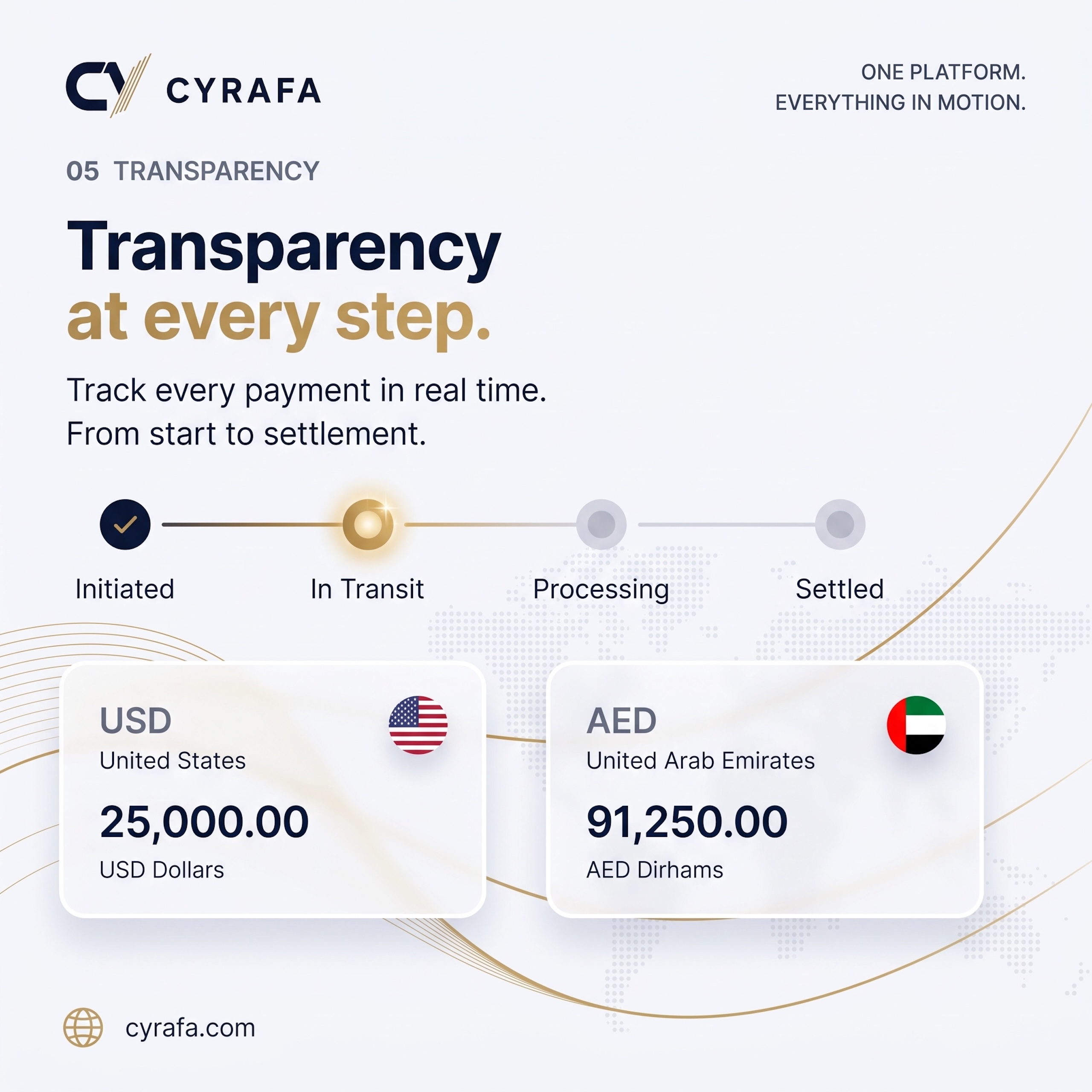
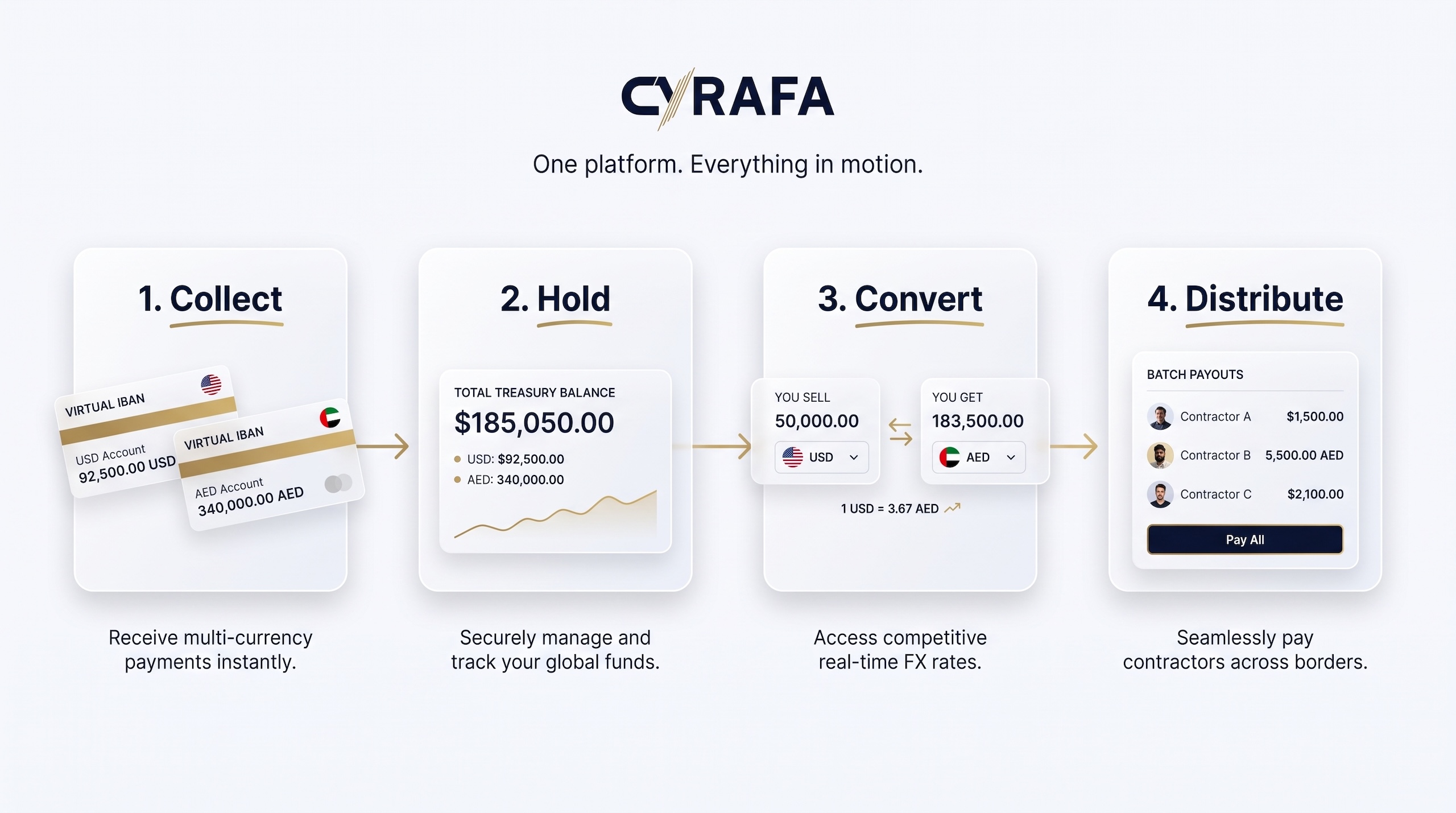
  • Crypto Payment Gateway for Forex Brokers: How It Works

    Crypto Payment Gateway for Forex Brokers: How It Works


    Ask any broker in MENA or Africa where their deposits come from now, and crypto will be near the top of the list. As card processing got harder and bank wires stayed slow, traders started funding accounts with USDT and other stablecoins — and brokers followed. A crypto payment gateway for forex brokers is the system that makes this work cleanly: it turns “send me crypto” into a managed, trackable, compliant payment flow.

    This guide explains exactly how that flow works, why stablecoins took over, what separates a good gateway from a risky one, and where crypto fits alongside your card and bank rails.

    Why brokers turned to crypto rails

    The shift wasn’t ideological — it was practical. Three things pushed brokers toward crypto:

    • Speed. Bank wires across borders can take one to five business days. On-chain transfers settle in minutes. For a trader who wants to fund and trade now, that gap decides where they open an account.
    • Reach. Crypto doesn’t care about correspondent banking relationships or whether a trader’s country has easy access to international cards. It works the same everywhere there’s a wallet.
    • Resilience. When a broker’s card processor or bank cuts them off, crypto keeps the deposits flowing. It’s the rail that’s hardest to switch off.

    Slow or unreliable withdrawals are one of the top reasons traders leave a broker. Crypto, done right, fixes both directions of that flow.

    How a crypto payment gateway actually works

    The underlying infrastructure is complex, but the flow a broker needs to understand is straightforward.

    1. A trader initiates a deposit on your platform and chooses crypto.
    2. The gateway generates a unique blockchain address tied to that specific transaction, so incoming funds can be matched to the right trading account automatically.
    3. The trader sends funds to that address from their wallet or exchange.
    4. The gateway watches the chain and confirms the transaction once it has enough network confirmations — usually minutes.
    5. The deposit is credited to the trader’s account in your CRM and trading platform, often automatically.
    6. Optional instant conversion turns the incoming crypto into fiat or a stablecoin, so you’re not left holding a volatile asset.

    Withdrawals run the same flow in reverse, with compliance checks and approval before funds leave. The whole point of a gateway versus “just give them a wallet address” is automation, reconciliation, and a clean record for compliance.

    The three jobs a gateway does

    A good gateway plays three roles in your operation, and you should evaluate any provider against all three:

    • Processing deposits from traders funding their accounts.
    • Handling withdrawals when traders take profits out.
    • Managing settlement between your operating accounts and your liquidity providers.

    A gateway that nails deposits but makes withdrawals slow or manual will still cost you clients. Treat the round trip as one system.

    Why USDT and stablecoins dominate

    Most broker crypto volume isn’t Bitcoin — it’s USDT and other stablecoins. The reason is simple: traders and brokers both want speed without volatility. A trader funding with BTC risks the value moving between deposit and trade. A stablecoin holds its value, settles fast, and behaves like digital dollars. For a brokerage, accepting stablecoins with optional instant conversion means you get crypto’s speed and reach without taking on price risk.

    What to look for in a broker crypto gateway

    Not all gateways are built for the forex workflow. General-purpose crypto checkout tools handle e-commerce, not trading deposits and withdrawals. Look for:

    • Real-time or near-instant settlement, so deposits and payouts don’t lag.
    • Optional fiat or stablecoin conversion, so you control your exposure.
    • Direct integration with MT5 and your CRM, so deposits credit automatically instead of by manual reconciliation.
    • Broad chain and asset support, with the networks your traders actually use (USDT on the chains common in your region).
    • Transparent fees, including how network fees are handled.
    • Compliance tooling — transaction monitoring and the controls your AML obligations require.

    That MT5/CRM integration point matters more than brokers expect. A gateway that doesn’t talk to your platform turns every deposit into manual work and every busy day into a backlog.

    Crypto vs cards vs bank wire: when to use each

    Crypto is powerful, but it’s not the whole answer. The strongest brokers offer all three rails and let traders choose:

    • Cards (Visa/Mastercard) capture the trader who wants to deposit instantly with the payment method they use for everything else. Card acquiring is the hardest rail for a high-risk business to obtain, which is exactly why having it is a competitive edge.
    • Bank wire suits larger deposits and more conservative or institutional clients.
    • Crypto wins on speed, reach, and resilience — and is often the only rail that works in restricted or under-banked markets.

    Offering one rail limits who can fund. Offering three means almost any trader, anywhere, can deposit the way they prefer.

    The honest tradeoffs

    Crypto isn’t risk-free, and pretending otherwise erodes trust:

    • Transactions are irreversible. A wrong address means lost funds. Good gateways reduce this with validation and unique per-transaction addresses.
    • Compliance still applies. Crypto doesn’t exempt you from KYC and AML. If anything, it raises the bar for monitoring.
    • Volatility is real unless you convert. Stablecoins plus instant conversion is how brokers neutralize it.

    A gateway worth using helps you manage these, not ignore them.

    How Cyrafa fits

    Cyrafa is a crypto payment processor built for this exact workflow: trader deposits and withdrawals with fast settlement, stablecoin support, and integration into the MT5 and CRM stack brokers already run. It’s designed to be the deposit-and-withdrawal rail, not a generic crypto checkout — which is the difference between automatic reconciliation and manual cleanup.

    And crypto is one rail of three. Cyrafa pairs Cyrafapay with Visa/Mastercard acquiring through cyrafa.me and forex-friendly business banking through Cyrafa, so the same operation can take deposits by card, by crypto, and settle through a real multi-currency account — without depending on any single provider that could cut you off.

    Frequently asked questions

    How fast are crypto deposits and withdrawals? Deposits typically confirm within minutes once the transaction has enough network confirmations. Withdrawals depend on your approval workflow and blockchain confirmation times, but are generally far faster than international bank wires.

    Do I have to hold crypto if I accept it? No. With instant conversion, incoming crypto is exchanged into fiat or a stablecoin automatically, so you avoid holding a volatile asset.

    Will a crypto gateway integrate with MT5? A broker-focused gateway should. Cyrafapay is built to credit deposits into the trading platform and CRM automatically rather than relying on manual reconciliation.

    Is accepting crypto compliant? Accepting crypto doesn’t remove your KYC and AML obligations — it adds monitoring requirements. Use a gateway with proper compliance tooling and keep your policies current.

    Next step

    If traders keep asking to fund with USDT and your current setup makes that painful, a broker-grade crypto gateway is the fix — and pairing it with card and bank rails makes your deposits almost impossible to disrupt. Cyrafapay handles the crypto leg, and Cyrafa covers all three rails together.

    This guide is general information, not legal or financial advice. Crypto and payments regulation varies by jurisdiction — confirm requirements for your markets before acting.

  • How to Open a Bank Account for a Forex Brokerage (2026 Guide)

    How to Open a Bank Account for a Forex Brokerage (2026 Guide)

    If you run a forex brokerage, you already know the hardest part isn’t the trading platform or the liquidity — it’s getting a bank to take you seriously. Most brokers spend more time chasing a working forex brokerage bank account than they spend setting up their MT5 server. Accounts get declined for reasons nobody explains, and the ones that open often get frozen or closed months later.

    This guide explains why that happens, what banking a brokerage actually needs, and the options that hold up over time — including how to set up multi-currency accounts without registering a local company in every market you serve.

    Why banks reject forex businesses

    Banks don’t reject brokers out of spite. They reject them because forex sits in a category they’d rather avoid: high-risk.

    A few concrete reasons drive this:

    • Reputational risk. A wave of unregulated brokers over the past decade gave the whole industry a bad name with compliance departments. Banks now treat “forex” as a flag, regardless of how clean your operation is.
    • Chargeback and fraud exposure. Card-funded trading accounts generate disputes. Banks carry the liability, so they price it as risk or decline outright.
    • Cross-border money movement. Brokers move client funds across countries and currencies constantly. That pattern looks like exactly the thing AML teams are paid to scrutinize.
    • Client-fund handling. Holding money that belongs to traders raises the bar. Banks want to see segregation, clear policies, and ideally a license.

    The result is a market that has tightened sharply. Tier-1 and Tier-2 banks rarely onboard brokers at all, and the easy offshore options that existed years ago have mostly dried up.

    What a brokerage actually needs from banking

    Before comparing providers, get clear on the three jobs your banking has to do. Most brokers fail because they solve one and ignore the other two.

    1. An operating account. Somewhere to receive revenue, pay staff and suppliers, and run the business day to day.
    2. Multi-currency capability. Your traders deposit in different currencies and you settle with liquidity providers in others. Without USD, EUR, and increasingly AED accounts, you lose money on every conversion and slow every payout.
    3. A clean path for client money. Whether through segregated accounts or a clearly documented flow, you need money movement that compliance teams can follow without alarm.

    A single fragile account at an unknown bank doesn’t cover this. That’s why so many brokers end up stitching together several half-solutions.

    Your banking options, ranked by how well they hold up

    Tier-1 and Tier-2 banks

    Realistically off the table for most brokers, especially offshore or newly licensed ones. If you have a strong onshore license (for example an EU or UK regulated entity) and a long track record, it’s worth trying — but expect heavy due diligence and slow timelines.

    Electronic Money Institutions (EMIs) and fintech-friendly providers

    The middle ground most brokers land on. EMIs and modern fintech account providers are more comfortable with the industry, move faster, and offer multi-currency accounts and IBANs. The trade-off is variability: some are excellent, some are fragile, and a few are quietly unlicensed. Vet the license before you route real volume.

    Tier-3 offshore banks

    The traditional fallback for offshore brokers — banks in smaller, less-developed jurisdictions. They’ll often say yes when others won’t, but you pay for it: limited online banking, slow support, higher fees, and a real risk that the account gets closed or funds frozen. Treat these as a backup leg, never your only one.

    Avoid: “creative” account brokers

    If a consultant offers you an account at an obscure bank in a jurisdiction you’ve never heard of, be skeptical. These accounts have a high failure rate, and a frozen account with client money inside is far worse than no account at all.

    What you’ll need to prepare

    Whichever route you take, onboarding goes faster when you arrive ready. Have these on hand:

    • Certificate of incorporation, plus memorandum and articles of association
    • Your forex license, if you hold one (it materially improves approval odds)
    • AML and KYC policies in writing
    • Proof of how client funds are segregated or handled
    • Recent financials and a clear description of your business model and target markets

    The single biggest lever here is licensing. A licensed broker is a lower-risk client, and banks price that in. If you’re operating offshore and unregulated, your banking options narrow considerably — which is part of why so many brokers diversify across rails instead of betting everything on one bank.

    The multi-currency reality: IBAN, USD, and AED

    For a broker serving MENA and Africa, currency coverage isn’t a nice-to-have. Traders in the Gulf want to fund in AED. Liquidity and settlement happen in USD. Regional clients arrive in a dozen local currencies. Every gap in your currency coverage becomes a conversion cost and a delay your competitors don’t have.

    This is where a dedicated business banking layer earns its place. Cyrafa provides forex-friendly business banking built for exactly this profile: IBAN, USD, and AED accounts, with no requirement to register a local entity in each market. For brokers who keep getting turned away by traditional banks or pushed toward fragile Tier-3 options, it removes the single biggest blocker to operating across borders.

    Banking is only one leg of the stool

    Here’s the mistake that sinks brokers who finally land a bank account: they think the payments problem is solved. It isn’t. A bank account lets you run the business. It doesn’t, on its own, let your traders fund their accounts smoothly.

    A complete brokerage payment setup has three rails:

    • A bank account for operations and settlement — covered above.
    • Card acquiring (Visa/Mastercard) so traders can deposit instantly with cards. This is the hardest rail to get as a high-risk business, and the one most brokers are missing. (See our companion guide on crypto and card rails, and our merchant-account guide.)
    • Crypto deposits and withdrawals for fast, borderless funding — now the default in regions where banking is slow or restricted.

    Cyrafa is built to cover all three: business banking through Cyrafa, Visa/Mastercard acquiring through cyrafa.me, and crypto deposits and withdrawals through Cyrafa. The point isn’t to use all three on day one — it’s that relying on a single rail is the most common reason brokers get stuck.

    Frequently asked questions

    Can an unregulated offshore broker open a bank account? It’s possible but difficult. Expect limited options, higher fees, and stricter ongoing checks. A license dramatically widens the field.

    Do I need a local company in every country I serve? No. The reason many brokers think they do is that traditional banks demand local presence. Account providers built for cross-border businesses — Cyrafa among them — let you operate with IBAN, USD, and AED accounts without incorporating locally.

    Why do banks keep closing accounts that they already approved? Risk reviews are ongoing, not one-time. A spike in volume, a chargeback pattern, or a policy change at the bank can trigger a closure. This is the core argument for never depending on one rail.

    Is an EMI account safe for client funds? A licensed, reputable EMI can be. An unlicensed one is a serious risk. Always verify the license and regulatory standing before routing client money.

    Next step

    Getting banked is the foundation, but a brokerage that can take deposits three ways — bank, card, and crypto — is far harder to disrupt than one leaning on a single account. If you want to map the right combination for the markets you serve, Cyrafa covers all three rails under one roof.

    This guide is general information, not legal or financial advice. Banking and licensing requirements vary by jurisdiction — confirm specifics for your markets before acting.

  • Why Stablecoin Payments Are Becoming Essential in 2025

    Why Stablecoin Payments Are Becoming Essential in 2025

    Why Stablecoin Payments Are Becoming Essential for Global Businesses in 2025

    In 2025, global businesses are shifting away from slow, high-fee traditional payment systems and embracing stablecoin payments such as USDT and USDC. With instant settlement, minimal transaction fees, and borderless accessibility, stablecoins are becoming a core financial infrastructure for modern commerce.

    This article explains why stablecoin payments are becoming essential for global companies — and how Cyrafa makes it easy to accept stablecoins worldwide.

    1. The Rise of Stablecoins in Global Payments

    Unlike volatile cryptocurrencies, stablecoins are pegged to real-world assets like the US dollar, making them reliable and predictable for business transactions.

    • Price stability
    • Low transaction fees (especially TRC20 USDT)
    • Instant cross-border payments
    • No banking restrictions
    • High global adoption in 2025
    • Easy API integration for businesses

    2. Why Businesses Prefer Stablecoins Over Traditional Payments

    Traditional financial rails are slow, expensive, and limited — stablecoins solve all these problems.

    1) Lower Fees

    Credit cards charge 2–5%. Stablecoin fees can be as low as $0.01, depending on the network.

    2) Faster Settlement

    Bank transfers may take days. Stablecoin payments settle in seconds — 24/7.

    3) No Chargebacks

    Stablecoin transactions are final, protecting merchants from fraud and disputes.

    4) Global Accessibility

    Anyone can pay with stablecoins, regardless of country or banking limitations.

    3. USDT (TRC20) — The Most Popular Stablecoin in 2025

    Businesses overwhelmingly choose USDT TRC20 because of:

    • Extremely low fees
    • High global adoption
    • Fast confirmations
    • Compatibility with most wallets

    If a business only accepts one crypto today, it’s usually USDT TRC20.

    4. How Stablecoin Payments Boost Global Commerce

    Stablecoins offer massive benefits for e-commerce, SaaS, and digital service platforms:

    • Eliminate payment failures caused by banks
    • Increase conversion rates
    • Fast global payouts
    • Access customers in restricted regions
    • Reduce operational costs

    5. Why Cyrafa Is a Top Choice for Accepting Stablecoin Payments

    Cyrafa is designed specifically for international businesses that want fast, secure, and easy stablecoin payments.

    • Supports USDT (TRC20 & ERC20), USDC, BTC, ETH, BNB & more
    • API-first architecture for developers
    • Low fees + fast settlement
    • No chargebacks
    • Global availability
    • Modern real-time dashboard

    Cyrafa makes stablecoin adoption simple — with clean API integration and a smooth merchant experience.

    6. Final Thoughts — The Future Is Stablecoin-Driven

    Stablecoins are rapidly transforming global payments. Businesses that adopt them today will operate faster, cheaper and more globally. And with platforms like Cyrafa, integrating stablecoin payments has never been easier.

    Get Started with Cyrafa
  • How Crypto Payments Increase Global Sales in 2025

    How Crypto Payments Increase Global Sales in 2025

    How Crypto Payments Increase Global Sales in 2025

    As digital commerce expands across borders, businesses are struggling to reach international customers using traditional payment methods. High transaction fees, slow transfers, banking restrictions and currency limitations all make global scaling harder than it should be.

    In 2025, crypto payments are becoming one of the most powerful drivers of global sales. Whether you run a SaaS platform, e-commerce store, service business or Web3 project, accepting crypto can unlock entire markets that were previously unreachable.

    Here’s how crypto payments are helping businesses grow faster and sell globally like never before.

    1. Borderless Payments Remove Geographic Barriers

    Traditional payments restrict who can buy from you. Credit cards get declined. Bank transfers take days. Some customers simply can’t pay because their country is unsupported.

    Crypto solves this instantly.

    With crypto payments:

    • Anyone from any country can pay you.
    • No banks or local processors are required.
    • No approvals or geographic blocks.
    • No need to support multiple local payment methods.
    • Customers can pay using wallets they already use every day.

    A customer from India, UAE, Nigeria, the USA or Brazil can all pay you the same way – instantly. This opens the door to millions of potential buyers that traditional systems can’t reach.

    2. Lower Fees Improve Profit Margins and Conversions

    Global payment processors often charge:

    • 3–6% per transaction.
    • Extra currency conversion fees.
    • International transfer or cross-border fees.

    Crypto payments usually cost between 0.1% and 1.0%, depending on the chain and gateway.

    Lower fees lead to:

    • Better profit margins for your business.
    • The ability to offer better prices to customers.
    • Higher checkout conversion rates.

    Stablecoins like USDT (especially TRC20) made payments extremely cheap and fast, turning global e-commerce into a much more profitable channel.

    3. Instant Settlement Means Faster Cashflow

    Cashflow is everything for growing businesses.

    Bank wires can take 2–7 days. Payment processors may hold funds. Card settlements are delayed.

    Crypto payments settle in seconds or minutes, not days.

    Faster settlement helps you:

    • Reinvest revenue more quickly.
    • Scale ad spend and marketing faster.
    • Pay global suppliers and partners on time.
    • Handle high-volume sales without cashflow stress.

    When money moves faster, your entire business can move faster.

    4. Access to Emerging Markets with High Crypto Adoption

    Countries like Nigeria, India, Turkey, the Philippines, Vietnam and the UAE have some of the highest crypto adoption rates in the world.

    In many of these markets:

    • Local payment gateways are unreliable or expensive.
    • Local currencies are unstable or restricted.
    • People already use stablecoins like USDT and USDC every day.
    • Global e-commerce is growing extremely fast.

    By accepting crypto, you tap into millions of customers who prefer to pay this way and often cannot use traditional cross-border methods easily.

    5. Zero Chargebacks Protect More of Your Revenue

    One of the biggest threats to global merchants is chargebacks. Fraudulent disputes and forced refunds can destroy profit margins.

    With crypto payments:

    • There are no chargebacks.
    • Transactions are final once confirmed on-chain.
    • You keep more of the revenue you earn.

    This gives merchants more predictable income and less operational stress handling disputes.

    6. Stablecoins Enable Predictable Global Pricing

    In 2025, stablecoins like USDT and USDC are the preferred payment method for many international customers.

    They offer:

    • Stable value pegged to the US dollar.
    • Simpler accounting and reporting.
    • Predictable pricing for your products in multiple markets.
    • Fast and cheap settlement compared to bank wires.

    This makes crypto payments practical and safe for real, revenue-focused businesses—not just for traders or speculators.

    7. Easier Integration Means Less Friction at Checkout

    Modern crypto gateways like Cyrafa make it simple to accept crypto from day one.

    With an API-first approach, businesses can:

    • Integrate crypto payments directly into their website or app.
    • Create custom checkout flows that match their brand.
    • Support multiple currencies and networks in one integration.
    • Monitor payments in real time through a clean dashboard.

    The easier it is for buyers to pay, the more sales you can close globally.

    How Cyrafa Helps Businesses Increase Global Sales

    Cyrafa is built specifically for global, fast-scaling merchants who want to accept crypto payments with maximum control and minimum friction.

    • Accept BTC, ETH, USDT, USDC, BNB, TERX and Cyrafa.
    • API-first design for developers.
    • Fast settlement with low fees.
    • Multi-chain support (ERC20, TRC20, BSC and more).
    • Secure, real-time merchant dashboard.
    • Global reach without relying on local banks.

    Whether you are selling digital services, SaaS subscriptions, online products or Web3 utilities, Cyrafa gives you the tools to reach and convert customers worldwide.

    Final Thoughts — Global Sales Need Global Payments

    To increase global sales, businesses need payment infrastructure that works anywhere, anytime, for any customer. Crypto payments deliver borderless access, faster settlement, lower fees and higher reliability than many traditional options.

    With an API-first gateway like Cyrafa, it becomes much easier to integrate crypto, support stablecoins and start selling to customers in every corner of the world.

    If you are ready to unlock new markets and grow your global revenue, now is the time to start accepting crypto payments.

    Get Started with Cyrafa